Hello everyone!
Is there a way to accomplish subparticle extraction and refinement from an icosahedral capsid CryoSPARC?
I am working on solving the structure of a 35 nm, T=3 icosahedral capsid and I am running into a resolution limit of exactly 4.37 angstroms. No matter what particle curation I do, I cannot get past this resolution. If I use all of the 8,000 auto-picked particles, I get 4.37 angstroms after refinement. If I do a bunch of rounds of 2D classification to remove all but the 1,300 best particles, I get 4.37 angstroms after refinement. The data was collected on a Glacios (200 kV) equipped with a Falcon 4 camera at a pixel size of 0.97 angstroms, so this resolution limit feels odd. I suspect it may be due to particle heterogeneity, as particle flexibility might be causing the loss of resolution during icosahedral averaging.
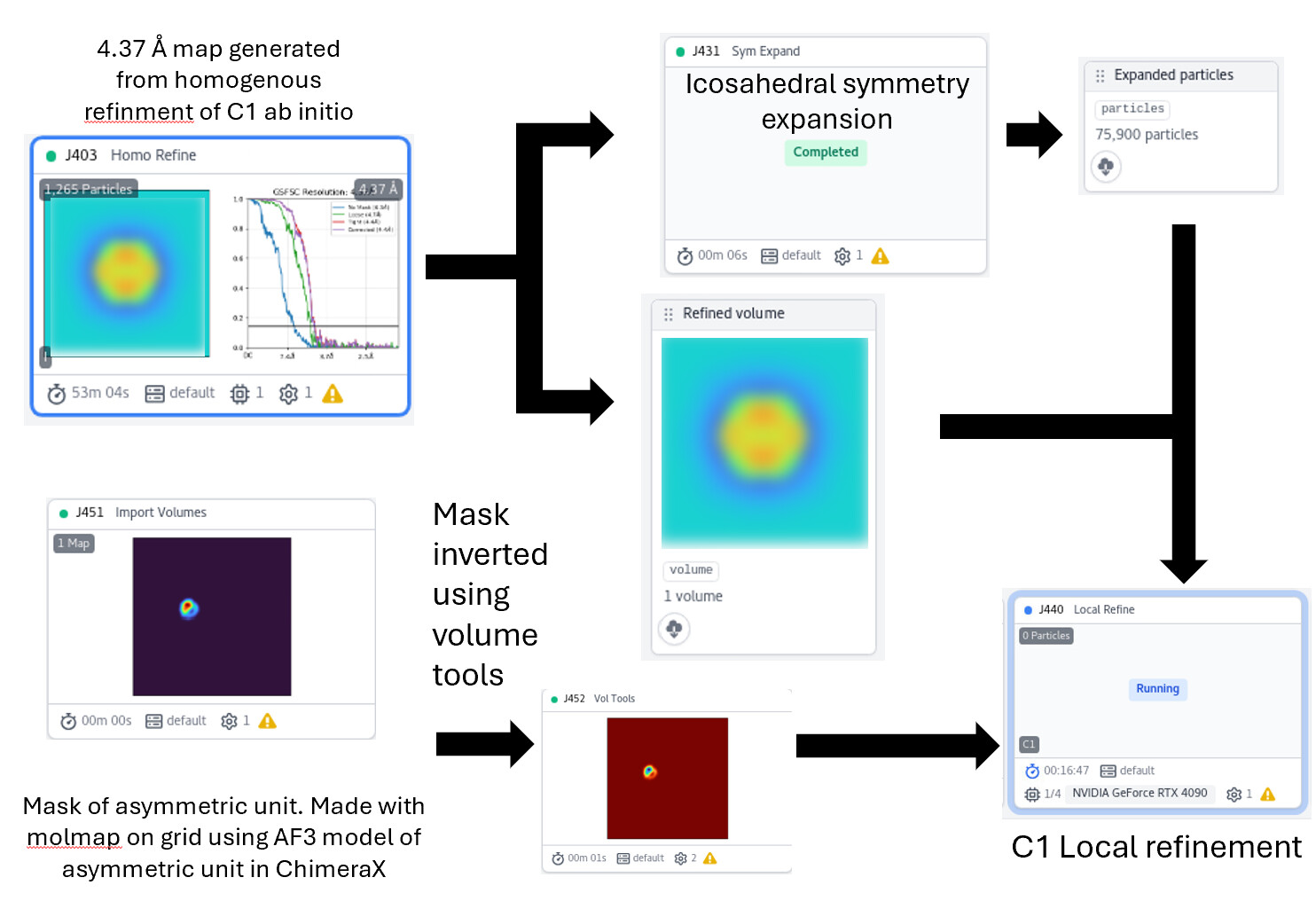
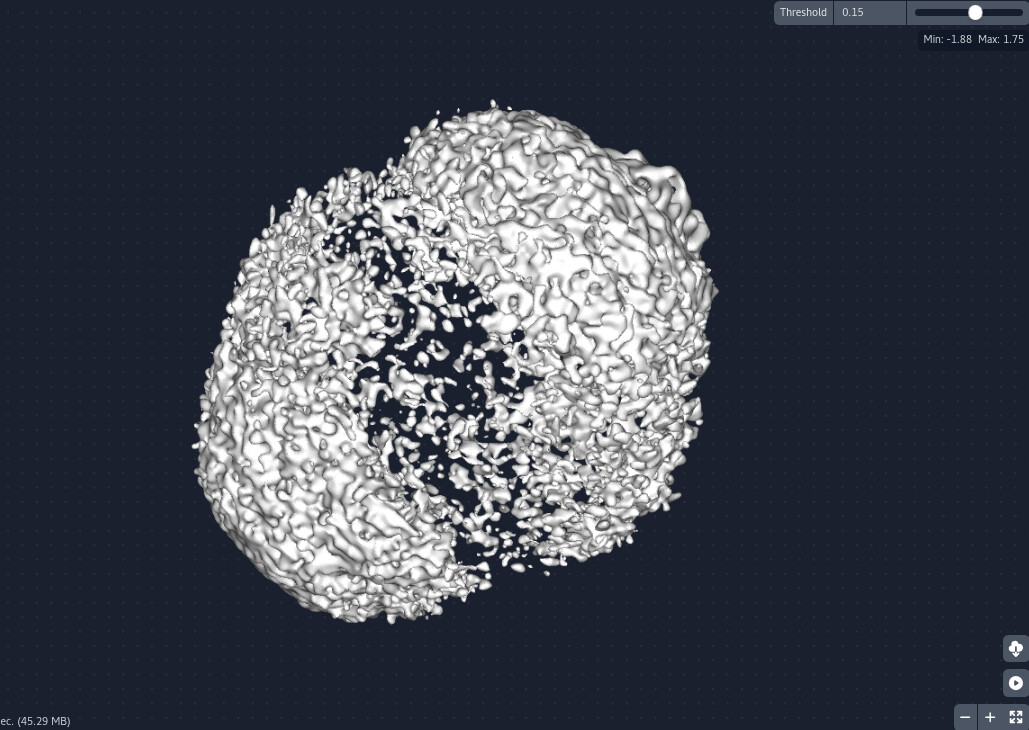
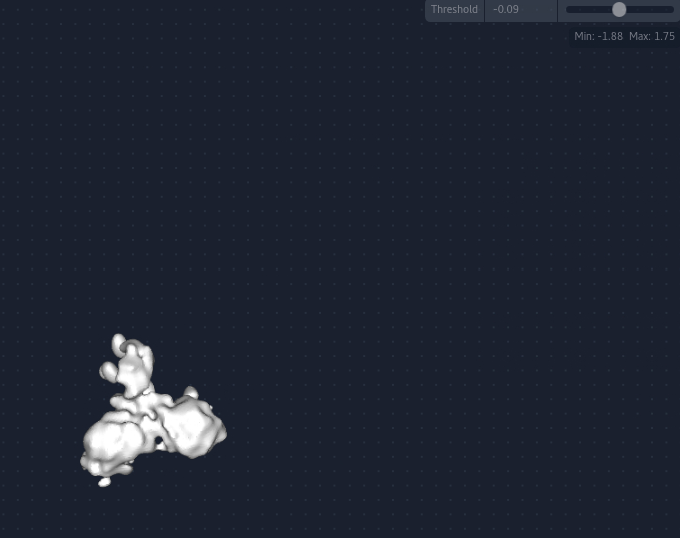
I’ve seen other research that got around this issue by doing icosahedral subparticle extraction and solving the pentavalent capsomere subparticle structure, but they used software external to CryoSPARC to achieve this (Cryo EM Analysis Reveals Inherent Flexibility of Authentic Murine Papillomavirus Capsids - PMC). I’ve been trying to come up with a workflow in CryoSPARC that would extract some kind of icosahedral subparticle (i.e., asymmetric unit, hexavalent/pentavalent subparticles), then do local refinement on those subparticles, but haven’t had any luck from my own reading and efforts. I included an image of my workflow with the volumes blurred below, as well as a couple images of the volume output at positive and negative thresholds.
Volume from local refinement at threshold of 0.15:
Volume of local refinement at threshold of -0.09:
Are there any suggestions or obvious issues with this workflow?
Thank you for your time!
- Clark