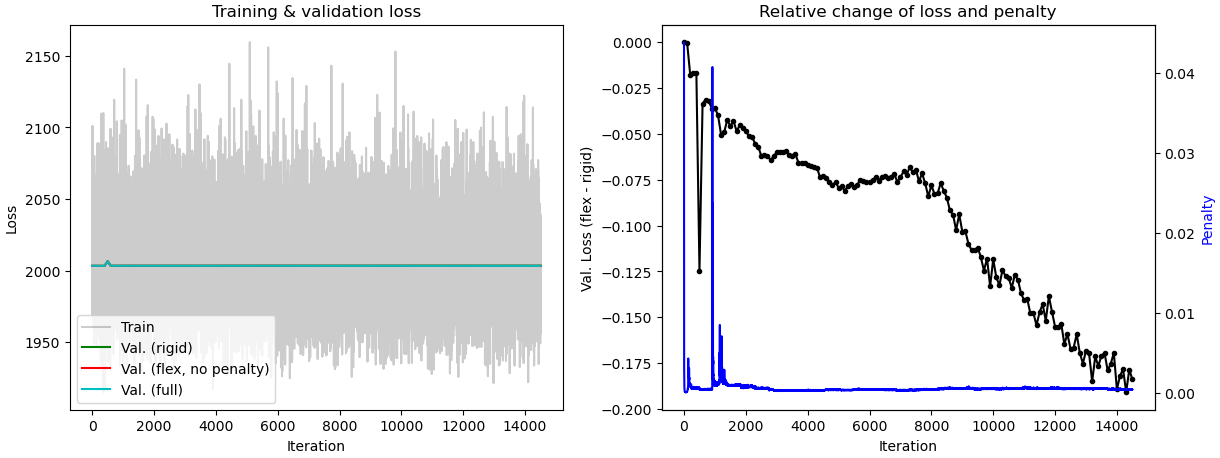
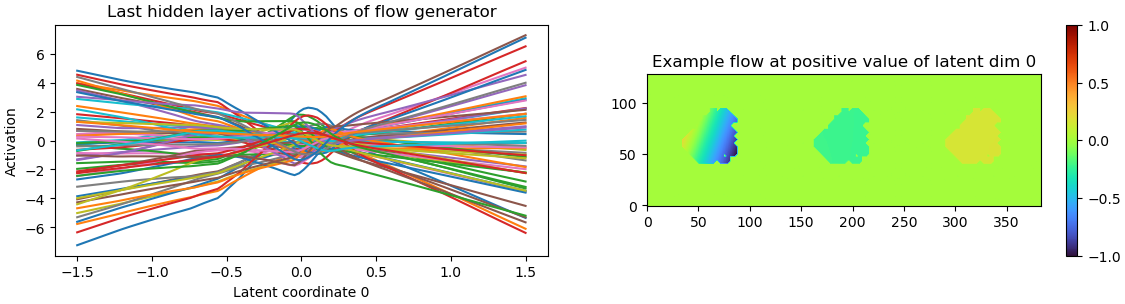
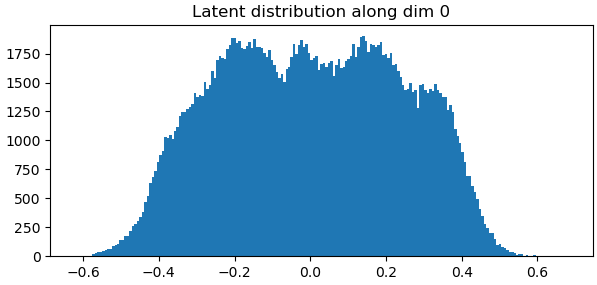
I have a relatively small and flexible pair of domains.It is a homodimer, and despite trying to reduce the flexibility as much as possible, the structure still suffers from motion between the two domains. 3DVA and heterogeneous refinement have done quite a bit to improve this, but the density is still poor.
The 3D Flex Training, to my eyes, looks successful. I have three segments (66,65,64), and there is a very simple tree of 66>65, 66>64.
I have tried particle re-extraction, RBMC, and a few other things too, but I get the same dip. Any ideas? No symmetry has been imposed (despite it being a C2 symmetry). There are 172k particles.
For the training, I have 1 latent dim, 0.2 Rigidity, 0.075 Noise Injection SDEv, and 2 latent centring strength. I tried increasing the BFGS in the reconstruction up to 40 but got the same answer.
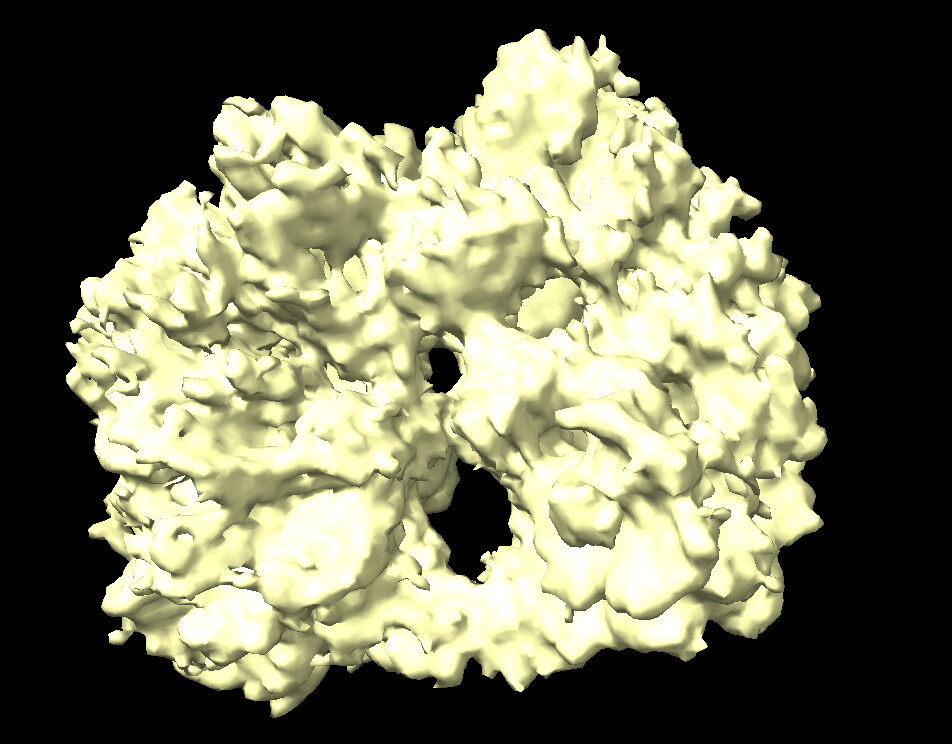
The flex map looks much better. I can see helical pitch and some bulky side chains, exactly where they are predicted to be.
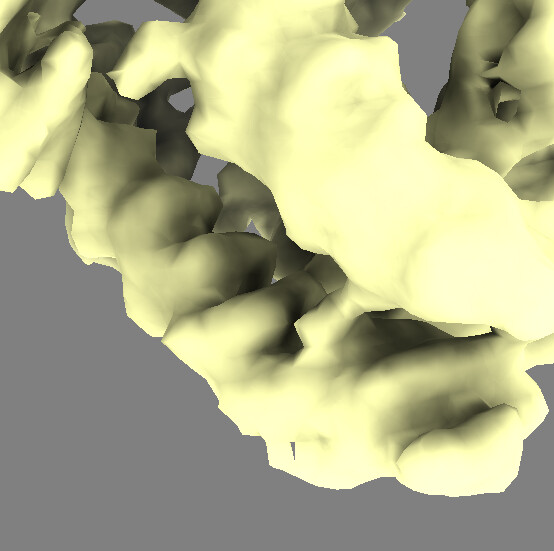
From the picture, helical pitch and sidechains are not obvious, and an improvement of ~6-3Å would be surprising. Do you have pictures showing more clearly the features you are talking about?
If I had to guess I would say this is overfitting of some kind. How much did you downsample for the training - what was the Nyquist?
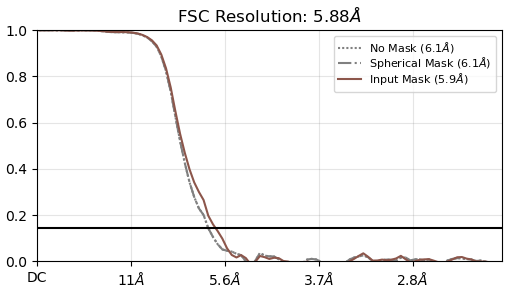
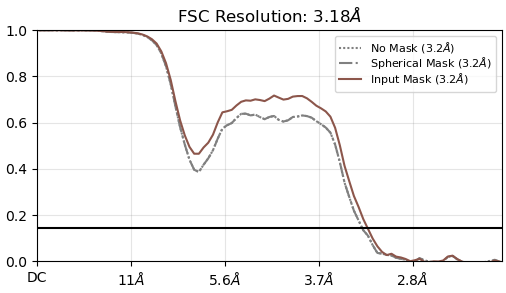
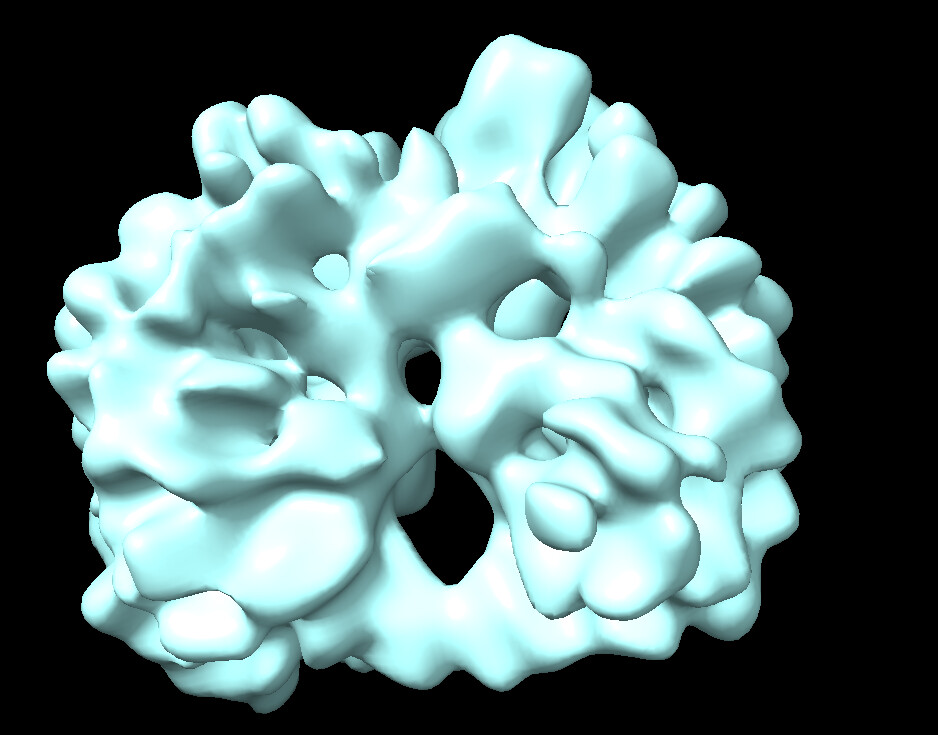
Hi @Glenn-Masson! Thanks for sharing a few images of your map. Could you also please share a few images of the input refinement and its GSFSC and cFAR plots? This will help us evaluate whether 3D Flex found any new features.
I will also note that we generally recommend downsampling the training images more than you have here, since 3D Flex does not use gold standard splits, meaning that the maps found by 3D Flex Reconstruction are only reliable (i.e., resistant to overfitting during training) beyond the training resolution. Since your training Nyquist is 3.5 Å, this map may be very overfit (and indeed, the map appears to have the telltale spikes and texture that we see in overfit maps).