I’m trying to understand a technical detail about cryoSPARC’s reconstruction pipeline: for ab-initio and homogeneous reconstruction jobs, does the algorithm use denoised particle images or raw images?
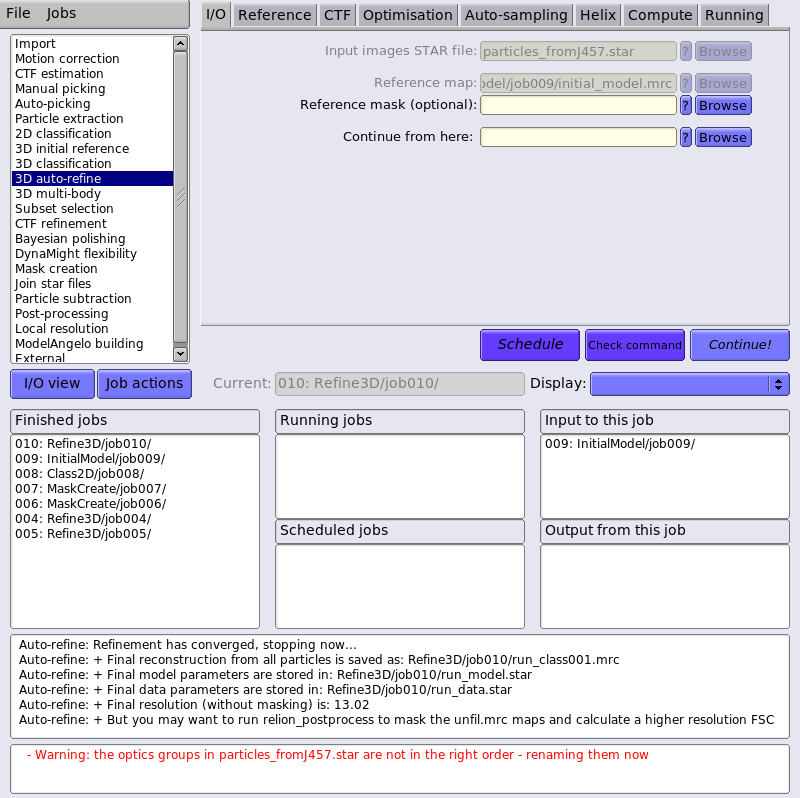
I’m asking because when I use cryoSPARC-reconstructed volume and particles as input for RELION’s 3D auto-refine, I get extremely low resolution. I suspect this might be due to differences in how the two packages handle noise modeling.
Thanks for the clarification! This makes perfect sense—the core principle being that reconstruction should preserve all frequency information. Is this concept explicitly documented in any publications?
Regarding the poor performance of 3D auto-refine, could this stem from fundamental implementation differences between cryoSPARC and RELION? I’m trying to understand which specific algorithmic or preprocessing variations might be causing this significant resolution drop.
cryosparc ignores euler assignments at the start of each refinement, “starting fresh”. If i remember correctly, relion does not, so it may be trying to use the eulers in the particle file and a volume reference on a different coordinate system. try ab initio of the particles in relion prior to refinement in relion?
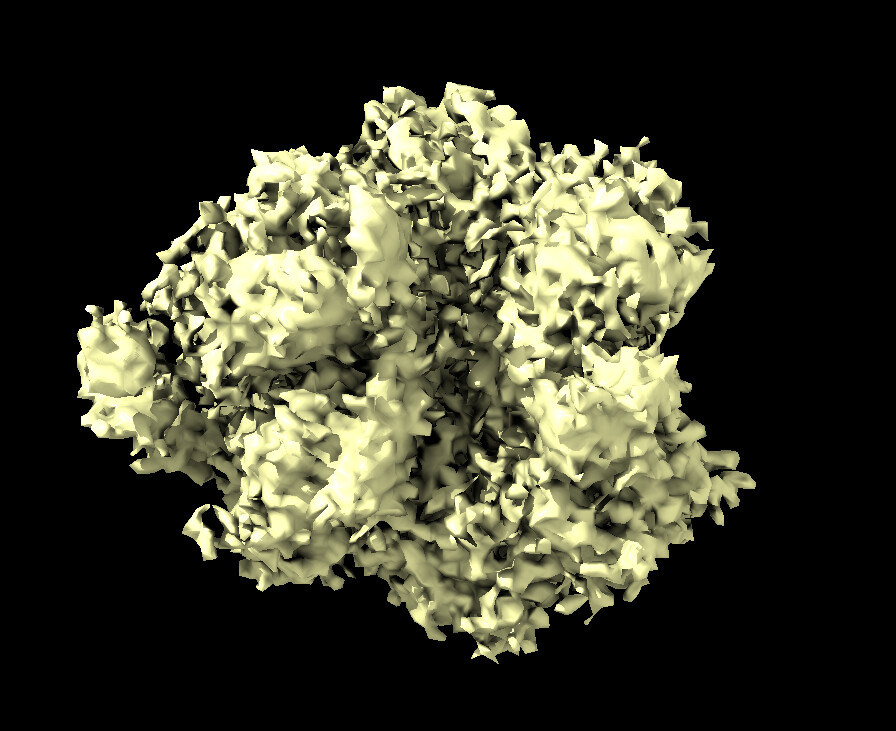
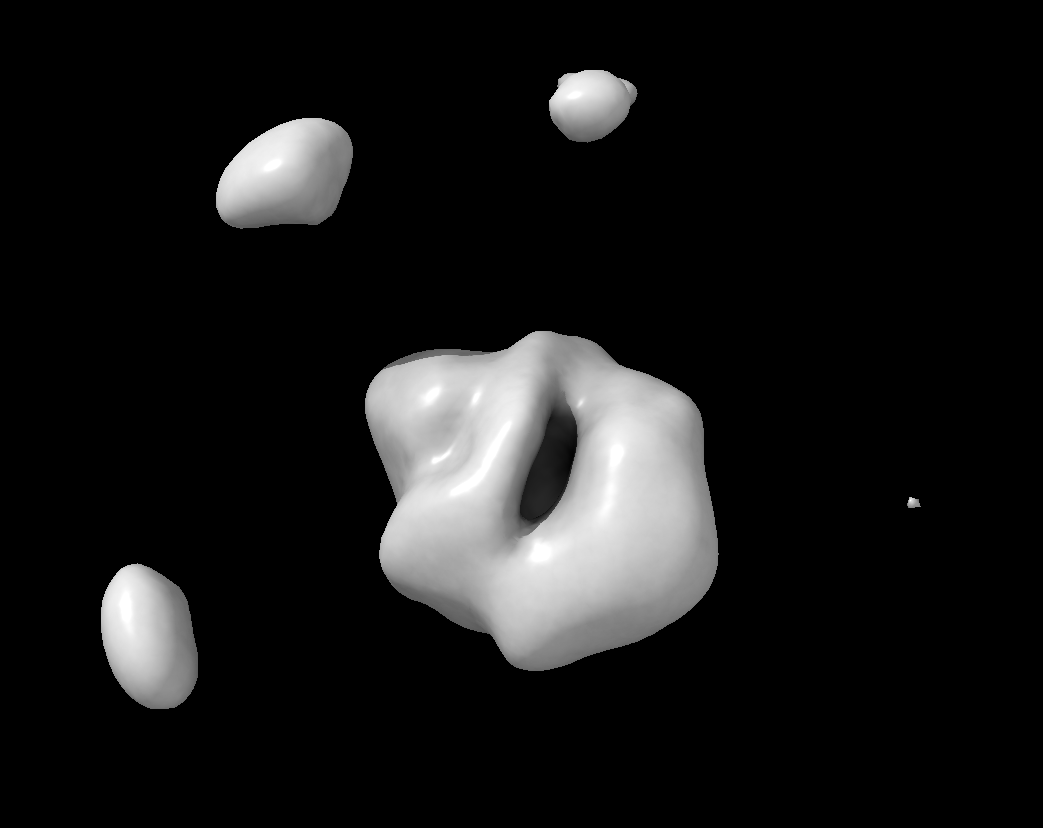
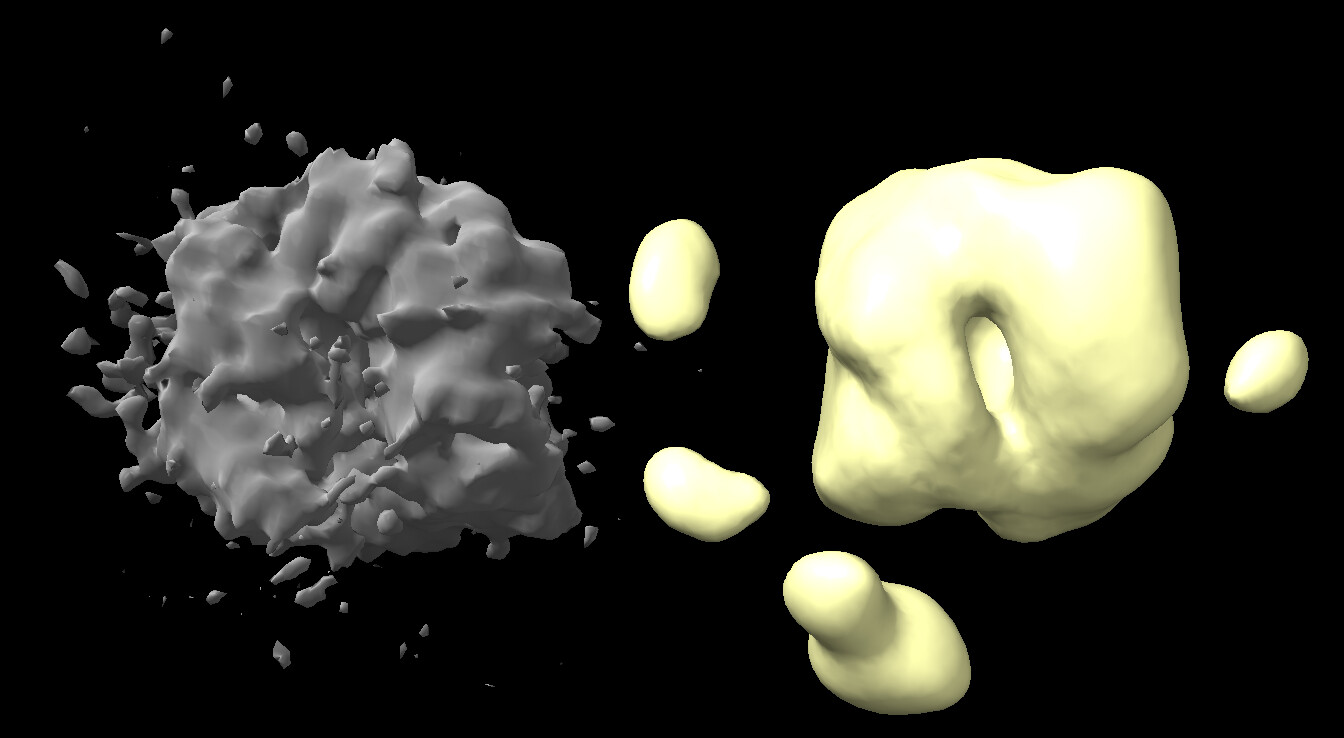
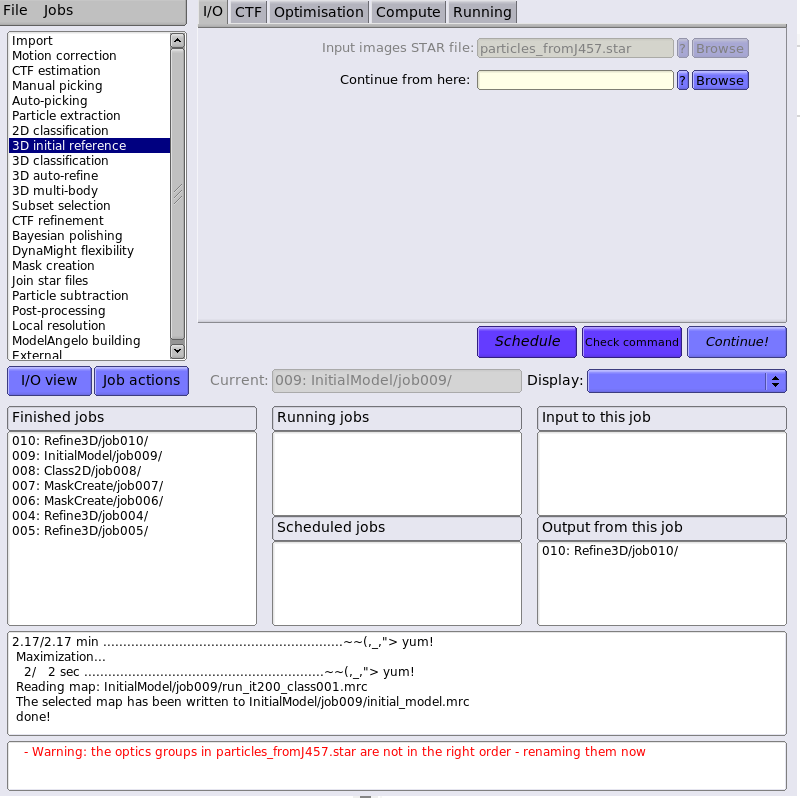
Thank you for the suggestion. I exported a subset of particles from CryoSPARC and performed ab initio reconstruction in RELION, which yielded good results. However, the resolution remains extremely low during 3D auto-refinement.
The grey density volume corresponds to the ab initio reconstruction, while the yellow one is from the 3D auto-refinement.