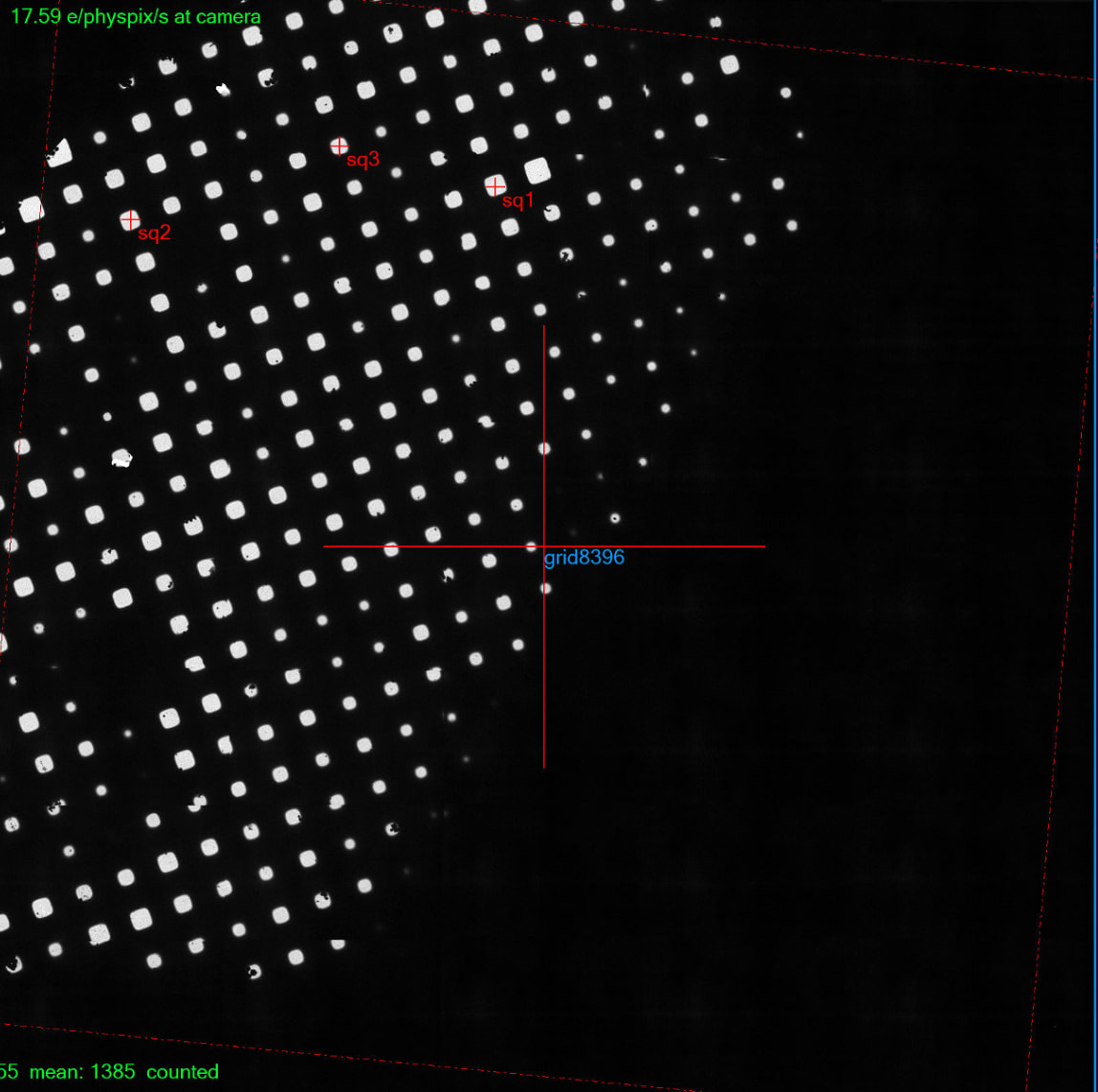
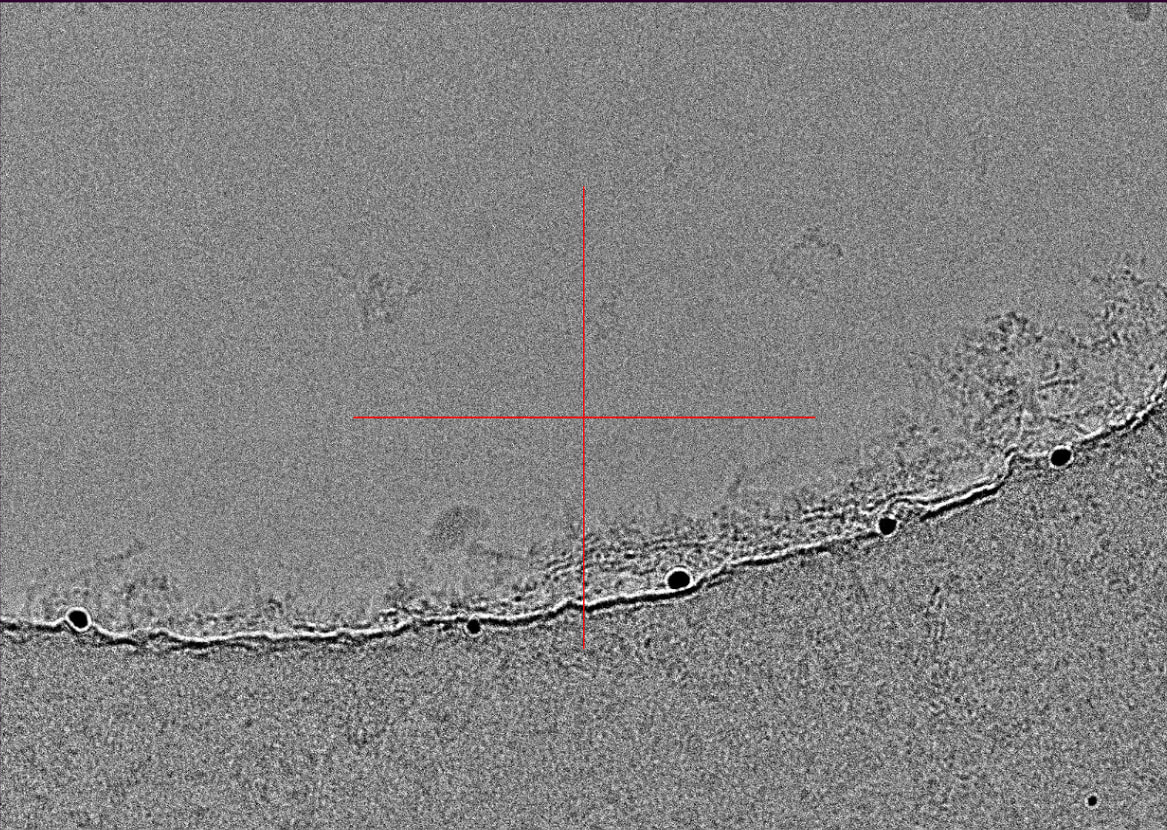
I’ve been experiencing breakage of 2 nm carbon film on quantifoil gold grids, and I am wondering if anyone has any ideas as to what can cause this breakage other than glow discharge conditions. The distribution of ice on the grids looks normal, but you can see in the high res image that the film is broken. There are still particles (at the edges and on the grid support), so the only issue right now is the film breakage. In the past, I have made grids successfully with no broken carbon, but these past few batches all look the same in terms of breakage. I have been glow discharging in air at 15 mA for 30s (also tried 10 mA 15s to no improvement).
I know the grids are ok in general because others in the lab use them with no breakage. My PI even made some grids with my sample on the same day as I and saw the same breakage, and she then made grids with someone else’s sample a few days later and things were fine. In the images, it looks like the film is peeling off the holes and wrinkling at the edges, but I can’t tell if the film still covers the support or not. Any ideas what may be causing this? I don’t think it’s a bad grid batch, and the vitrification conditions are the same across all of the lab. Could it have something to do with wait time or blot time (10-30 s wait time, 1.5 s blot time, 0 blot force)? Clipping? Transferring grids around?
If others in the lab are using them and they look OK, then it does seem to be a situation where you are doing things differently than others. With the thin carbon film especially, one parameter that can change things is humidity and how long you keep the blotting paper in the chamber prior to blotting. The blotting paper fibers should be as saturated as possible before blotting so that they are least likely to snag on the carbon and pull on them. So usually this means leaving the blotting paper in there for at least a few mins to equilibrate with the humidity before plunging. If you are too speedy it can be a detriment – or can depend on how humid it is outside!
Blot force can also definitely impact things. Assuming you are using a Vitrobot, it is good to calibrate the blot force before use. What I do is put the blotting papers on and test blot with no grid and find the blot force number that corresponds to them just touching and call that blot force zero. This will mean that you can calibrate any Vitrobot you use to the same blot force, even if the Vitrobot drifts slightly over time or others use it and things get slightly out of whack. This is especially helpful in situations where many people use the same plunger with extremely different blotting conditions, but is good to check every once in a while regardless. Sometimes room environment can change how the Vitrobot works slightly even if nothing else changes.
Ultrathin carbon layers are difficult to work with anyways – they are tempermental and degrade over time (and with glow discharge to some extent). But if others in your lab are having success with the same batch, try looking what they do on those fronts and see if that makes any difference for you!
Edited to add: officially I think the lifespan is ~6 mo after purchase of the thin carbon Quantifoil grids, but that can be extended with careful storage (temp + humidity control, in desiccator). We store them normally and they do last longer, but buy in small batches unless you’re really going through them.
Secondly edited to add: The same grid box can contain different batches of grids. If grids before and after yours seem to not have issues but yours do have issues, this points towards user differences. But if yours and your PI’s don’t work and then everyone’s now work, or you are taking from one side of the box and your coworkers are taking from the other side, this may be two different grid batches in the same box. Batches are usually consecutive within a box, to the best of my knowledge.
Thank you for the insight! I will check the calibration of the blotting force, and I didn’t think about making sure the blotting paper is fully humidified first, so that is very helpful. I also did not know that multiple batches of grids are contained within one box, so that is good to know. Thank you!
Thanks for the link. This instrument is cleaning both with UV and ozone.
From my experience, light glow discharging will not make the grids perfectly hydrophilic. Do you get “hydrophobic” patches, drops or “fried egg” ice with this method?