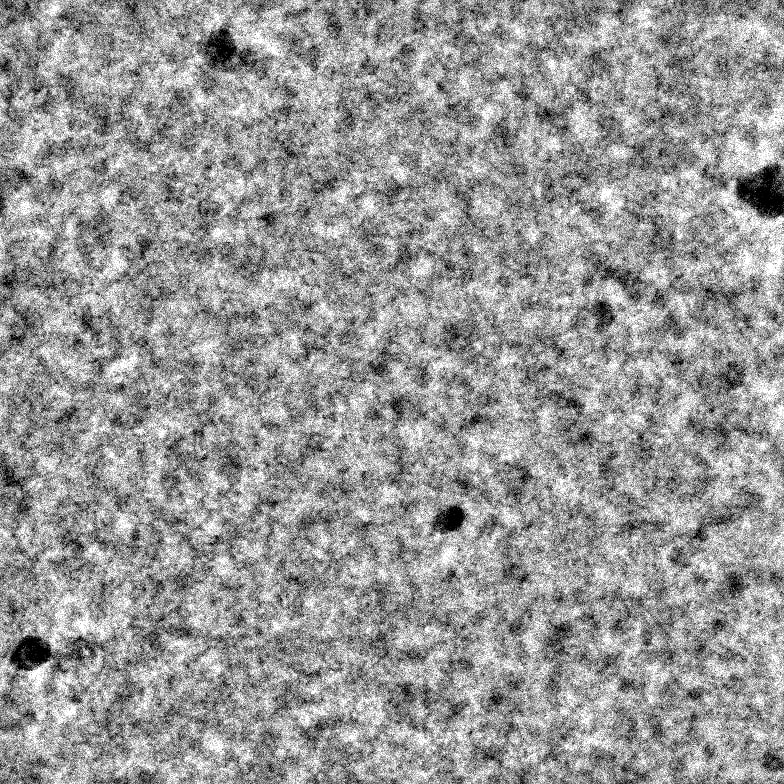
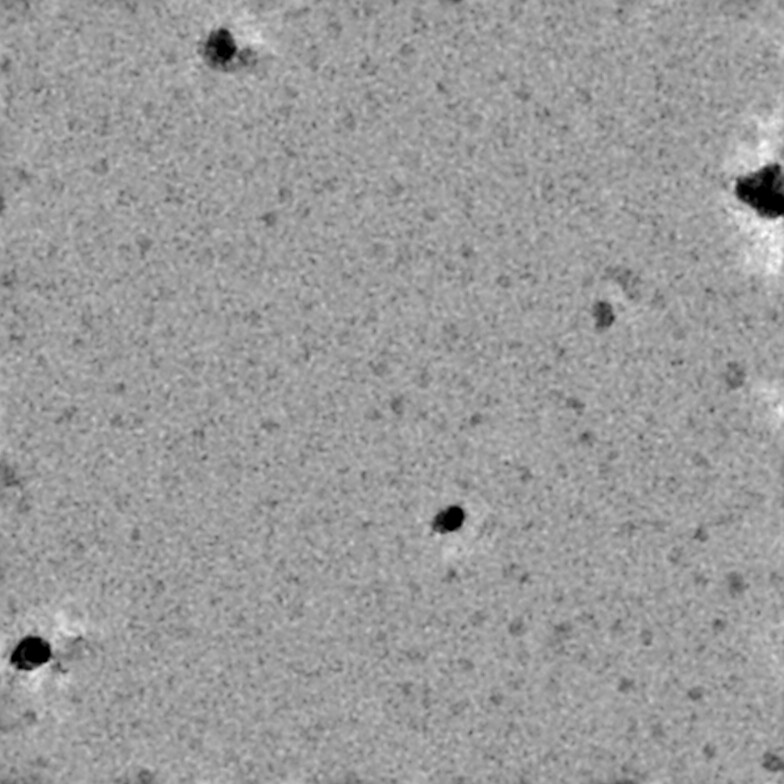
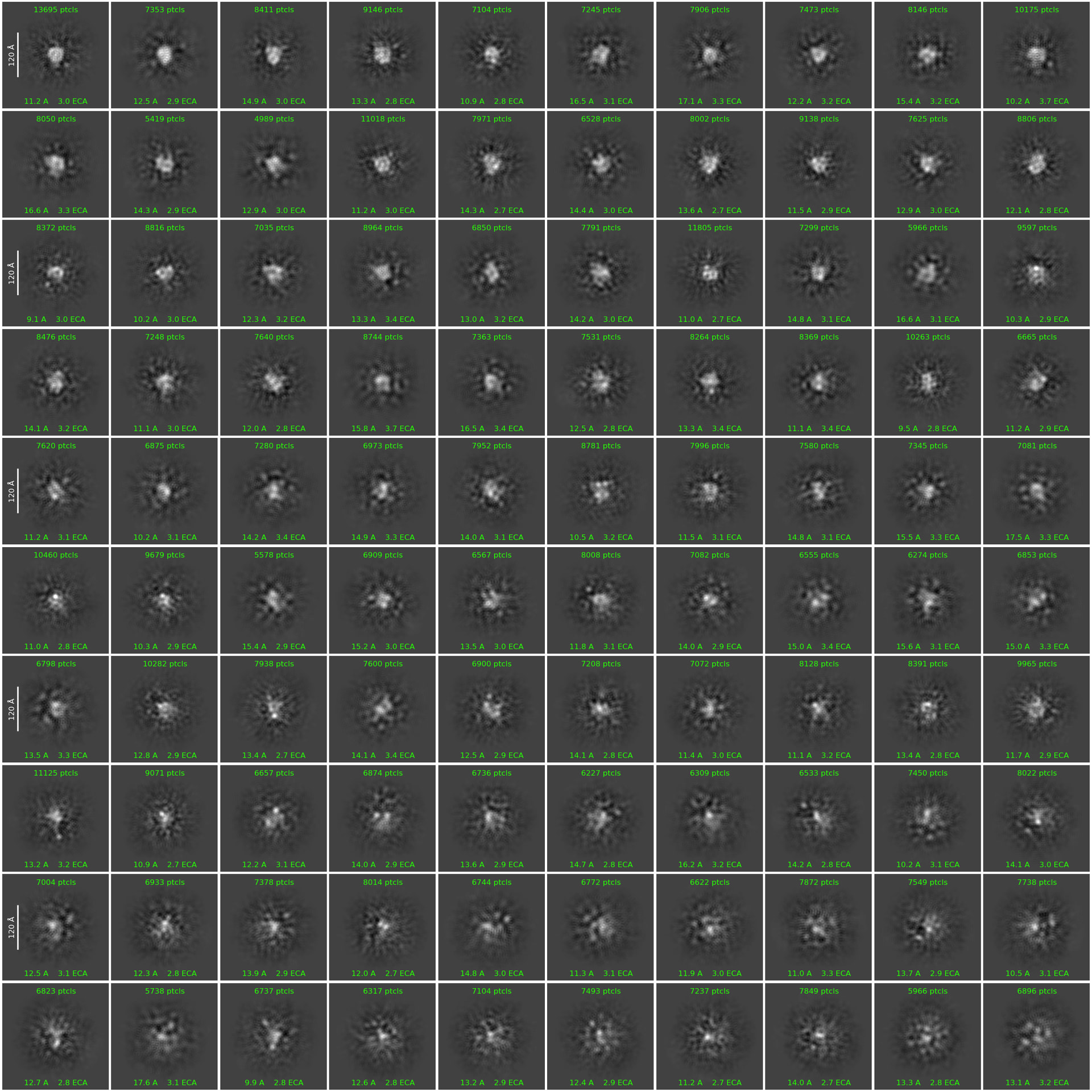
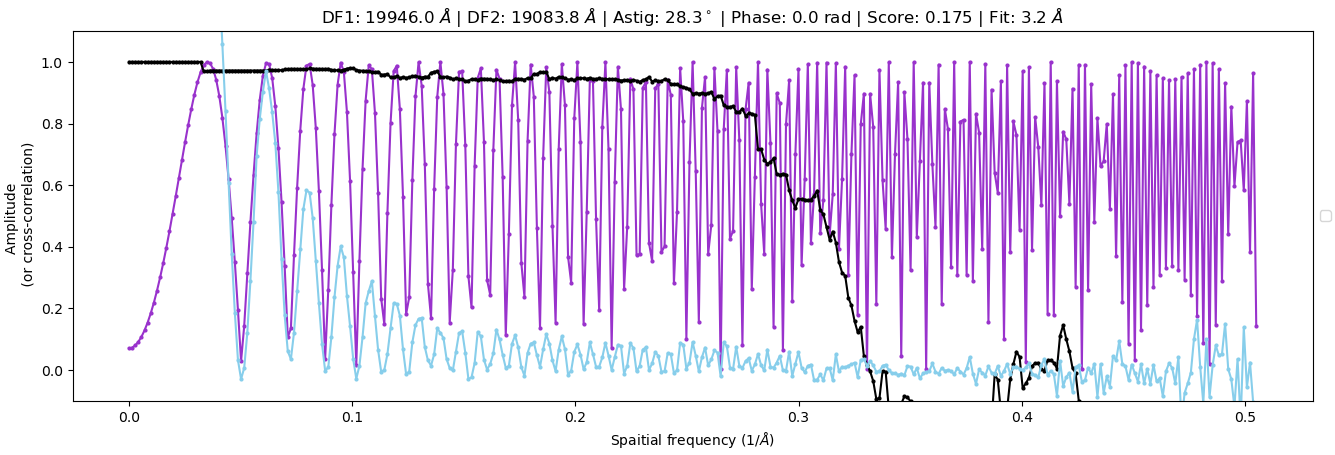
I am having issues trying to a get a good set of 2D classification particles. My sample is suppose to be a complex between two proteins. One protein is 35 kDa and the other 66 kDa. I have attached a micrography before and after denoising.
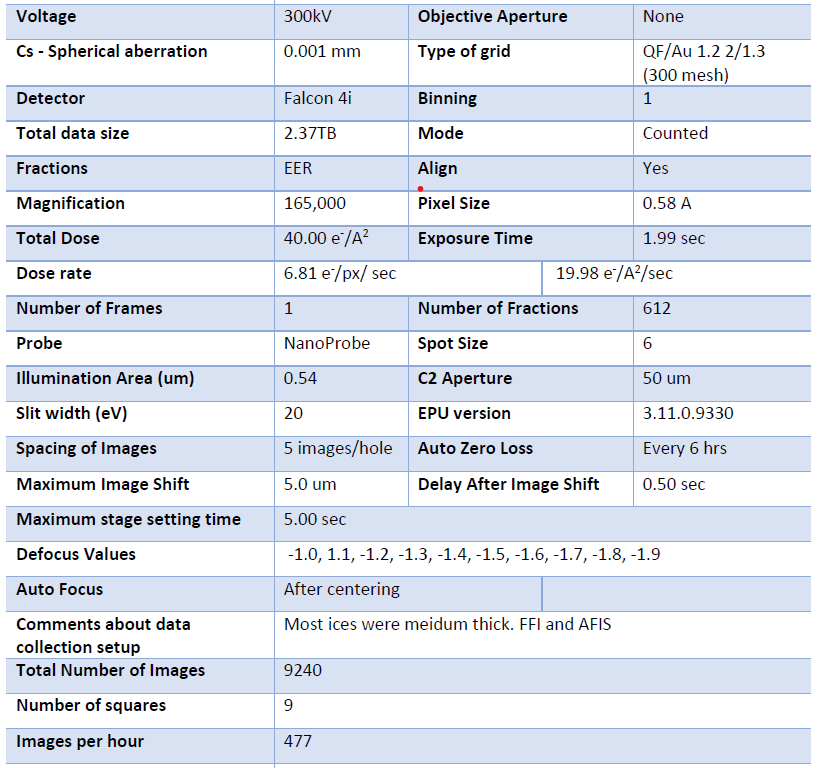
Looks fine assuming that this is representative of the dataset, ice should be fine. Did you collect with an energy filter?
My money would be one some denaturation or dissociation of the complex then. Can you get it on graphene? We have seen that can fix some of these problems.
I wouldn’t expect this to be easy. You are really working on the limit of what can be done in SPA (in terms of size). That taken in account, your 2D classes don’t look that bad, actually. You can try different box sizes, select many classes from above and start trying to get some information in 3D. Do not expect ab-initio to give you nice-looking maps, so you can try refining an original map in homogeneous refinement and running 3DVA or hetero refinements. You might need to go back, re-extract with a different box size and try again, until you get conditions that allow you to separate the complex from free proteins. The scenario is not straightforward. For those kind of sizes, some people add large binders that allow easier particle identification, and in your case you can try to find a binder that stabilizes the complex of interest.